
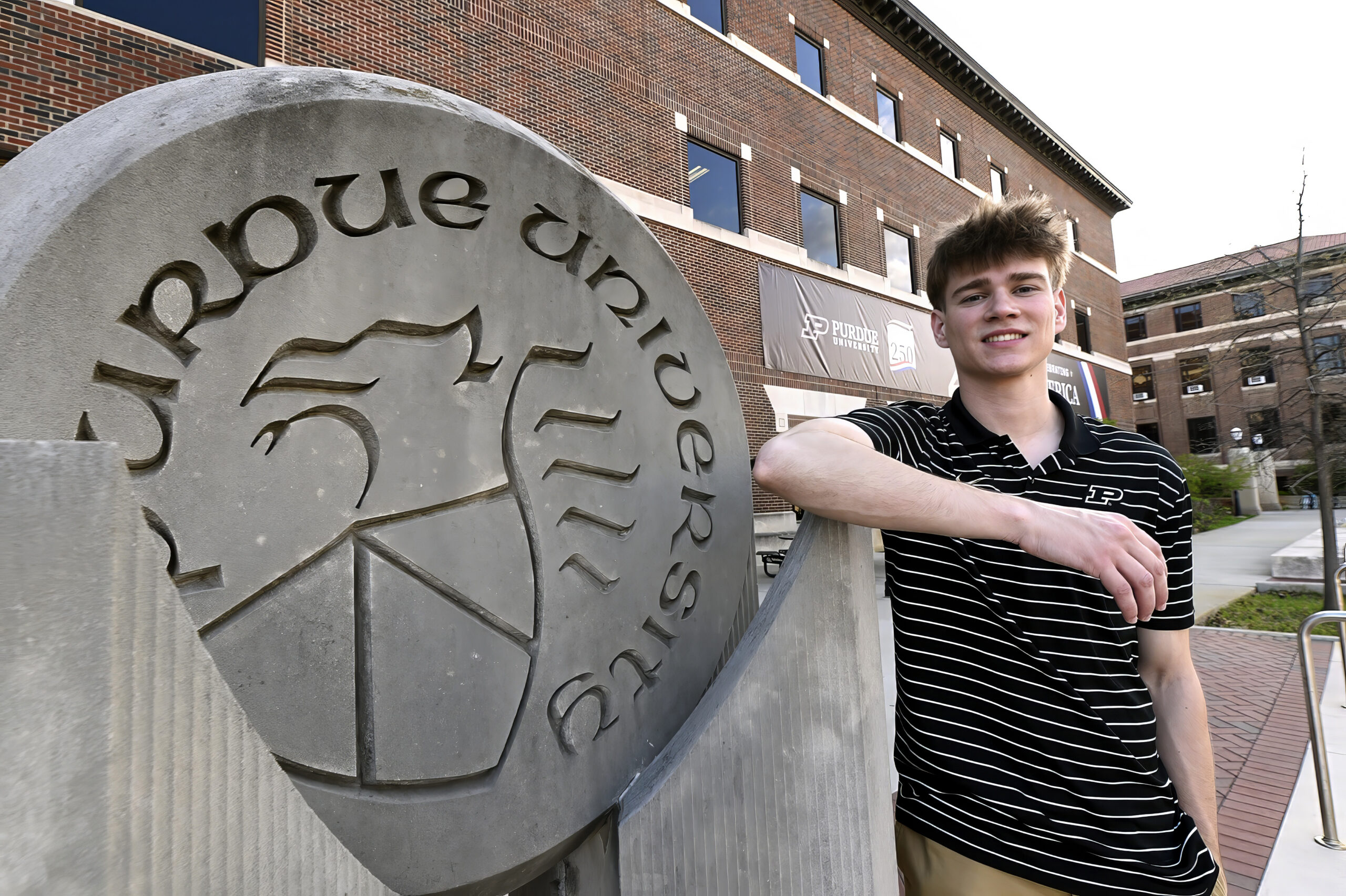
That struck Schilt. How might someone get involved and make student government leaders aware of ideas like that?
“When I heard that, I thought it was a really cool suggestion,” Schilt said. So off he went to student government in November asking how he could help make things happen.
“I met the president and got a rundown of what she does and what it might look like to get involved,” he said. “She told me, ‘Based on your prior experience and everything that I’ve heard, I think you should give it a shot and run for an executive board position as a freshman.’ I said, ‘Whoa, that sounds really ambitious and unusual,’ ” given he had not yet been involved in student government at Purdue.
She challenged him to get involved right away because by his junior year he could be a leader. The student body president took it a step further, suggesting he might talk to one of four announced candidates for president for ’26-27 – Kelby Roberts.
“She (Roberts) needs a running mate,” Schilt was told. “She has met with several people and she is having a problem clicking with them.”
Roberts was the parliamentarian for student government in the fall.
Enter Schilt, who had just recently been learning about Purdue Student Government with no prior student government experience at Purdue, but who was class vice president at Carmel High School for three years.
“I met her and it went beautifully,” he said. “We both have a similar mindset, good work ethic, and are organized.”
All of a sudden – as a freshman without having previously been involved in Purdue Student Government – he was her running mate as vice president for the West Lafayette campus.
“This meeting happened right before winter break. When we got back to campus, we spent the next two months preparing for the upcoming election.”
Tickets for the leadership positions needed 1,000 student signatures on their petition within a two-week period to qualify.
“We got 800 signatures in the first three hours,” he said. Because of that immediate success, the other three tickets took notice.
“One week into the petitioning process, one group dropped out and wanted to join our team,” he said. They were impressed with the momentum of the Roberts-Schilt ticket. The other two tickets did not achieve the necessary 1,000 support signatures within the two-week window.
“We won by default, which took off so much stress,” Schilt said. “In some ways that was disappointing because I was so excited for the upcoming campaign. We had a lot of stuff planned out. We had frontloaded so much that it put us in a very good position.”
In preparation for his run for vice president, Schilt started attending Purdue Student Senate meetings “and I very much liked the process. They bring in a lot of interesting speakers from university staff.”
In addition to working with a group of 10 cabinet members, the vice president presides over the Senate. While he leads the legislative branch meetings, he shares his vice president duties with a student from the Indianapolis campus.
“One of the things we really want to work on is enhancing student life in Indianapolis through student organizations, getting feedback from students in Indy, and figuring out what things need to get moving there. We want to create a new mainstream communication line for the university.”
The new president and vice presidents ran on three priorities – unify, amplify and support the student experience.
“Our administration can help make student issues more known,” he said. “I think students are generally aware that if they really want to make changes, there is someone they can reach out to, but I think we have to build a path whereby it can be more convenient for them.”
Schilt does not think he would have taken such a bold step to consider running for VP without the fraternity.
“Those were the first guys that I reached out to when I was thinking about doing it,” he said. “I tried to make everyone aware of it and as soon as I did, they were saying that would be so cool. And they encouraged me to go for it.
“I sent out a message to our group chat when the petitioning process was starting, and the support was overwhelming. I don’t know if, had I not joined Pi Kappa Phi, I would have done this. Having that support system was such a big motivator for me.”
Schilt hopes to attend medical school to become a surgeon like his ENT father. His mother is a teacher at Carmel High School.
“I got unwavering support from my family,” he said. “My family has been so supportive. It’s been so fulfilling and rewarding, and it hasn’t even begun yet.”
Schilt says he anticipates working about 30 hours per week in his new job this fall.
He came to Purdue with class credit already established, then took 18 and 21 credit hours during his first two semesters.
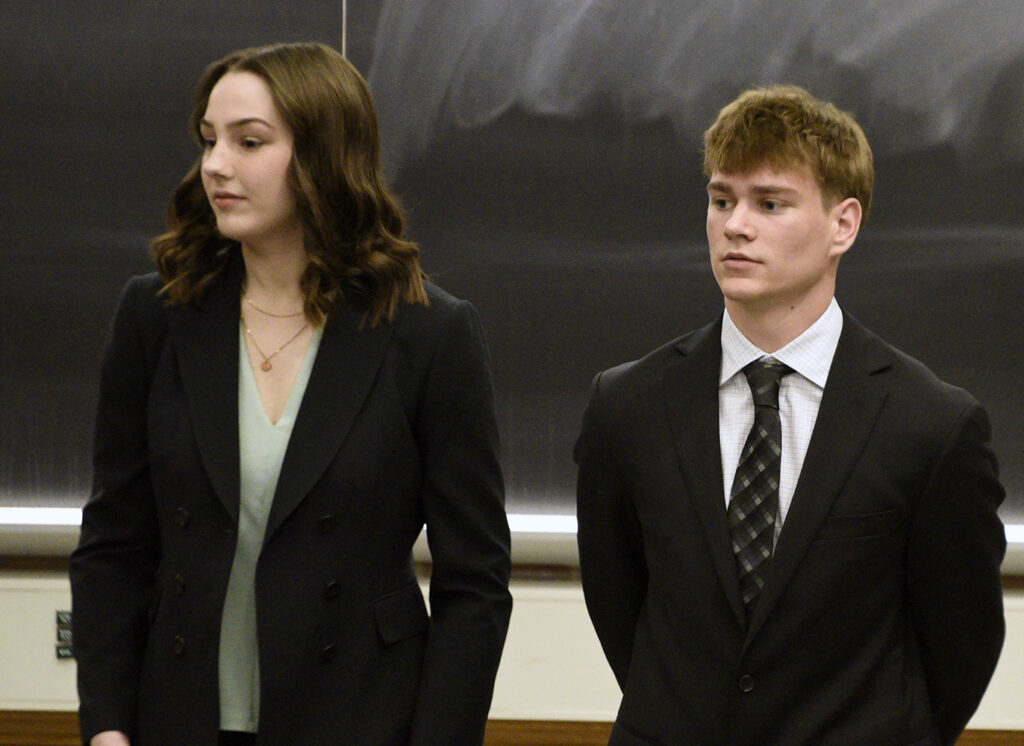
Matthew Schilt (right) takes the oath of office alongside the Indianapolis campus vice president on April 29, 2026.

Outgoing Purdue Student Government vice president Nicholas Neuman hands over the gavel to Matthew Schilt signifying authority to run the Senate meetings.
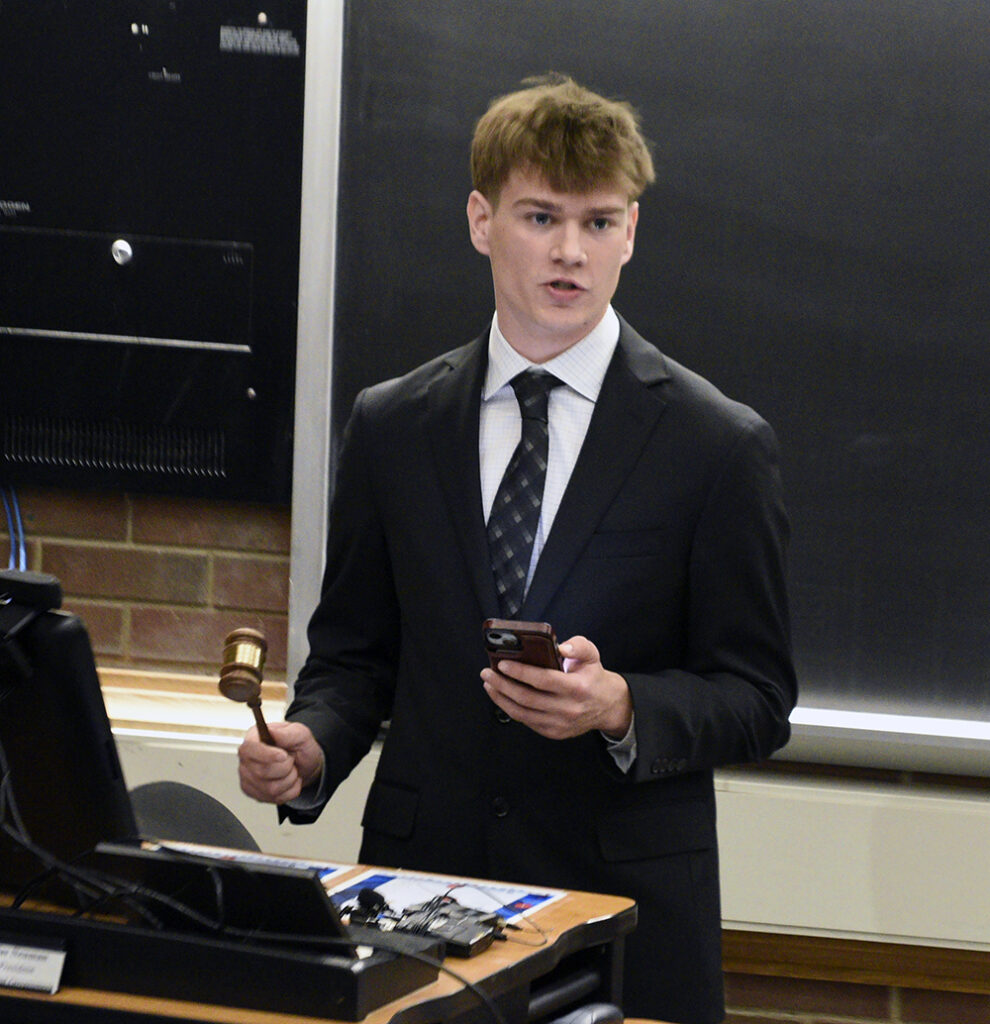
New vice president Matthew Schilt gavels the last meeting of the Purdue Student Government Senate meeting on April 26, shortly after taking the oath of office.
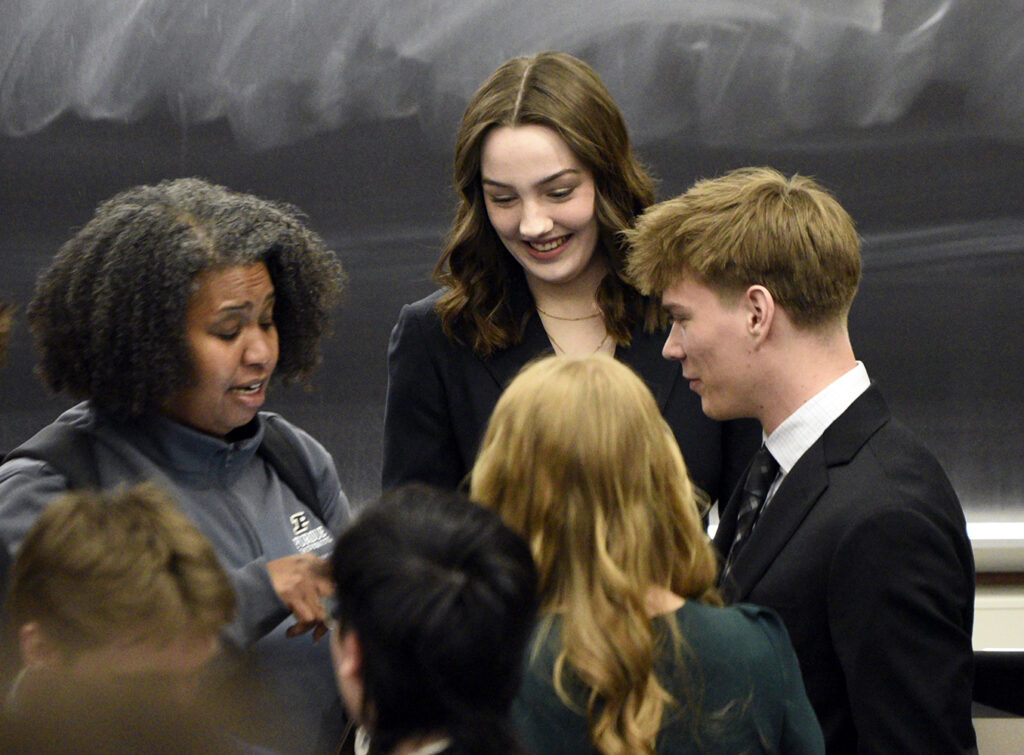
New Purdue Student Government vice president Matthew Schilt (far right), speaks with Martina King, director of student involvement in the Purdue Student Activities and Organizations Office, following the conclusion of the April 29 Student Senate meeting.

Matthew Schilt (left) prepares to be asked questions alongside the new president for a video following their installation as the new leaders of Purdue Student Government on April 29.